Hey folks, today we’re going to dive into the world of crochet and explore the unique and charming tradition of Irish women and their crochet skills. Get ready for a journey into the wonderful world of Irish crochet!
When you think of Ireland, you might picture breathtaking landscapes, lively music, and a rich cultural heritage. But did you know that crochet has a special place in the hearts of Irish women? Crocheting in Ireland has a long-standing history and is deeply intertwined with the country’s traditions. Irish crochet, also known as “Irish lace,” emerged in the mid-19th century as a response to The Great Hunger.
The Great Hunger, also known as the Irish Potato Famine, was a profoundly tragic period in Irish history, profoundly impacting all segments of society, including women. Occurring between 1845 and 1852, this devastating event was characterized by the widespread failure of potato crops, which served as a vital source of sustenance for the majority of the population. As the famine unfolded, women faced significant challenges and hardships. With the loss of their primary food source, they had to navigate the grim reality of starvation, disease, and destitution.
However, amidst the dire circumstances, women demonstrated remarkable resilience and resourcefulness. In their struggle for survival, many turned to handicrafts as a means to support themselves and their families. Crochet, in particular, emerged as a popular skill among Irish women during this time. They honed their crochet techniques and crafted intricate lacework, which soon gained recognition for its exceptional quality and craftsmanship.
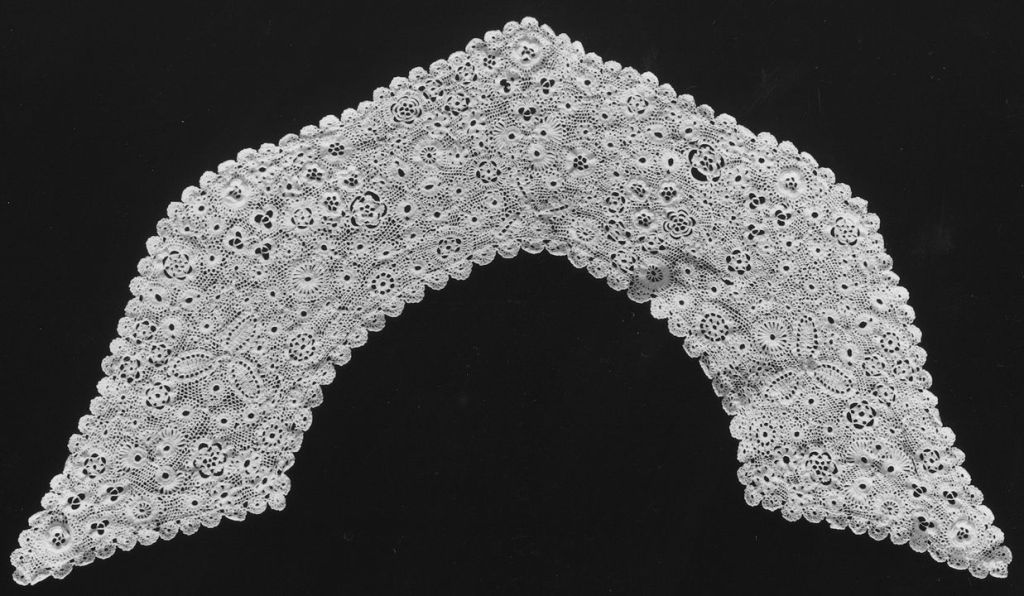
Crochet provided an opportunity for women to generate income and secure their livelihoods. They would create delicate lace items, such as collars, cuffs, and shawls, which found a market both within Ireland and abroad. Some women formed cooperatives and established cottage industries, pooling their talents and resources to produce larger quantities of crochet items for export. These endeavors not only offered financial independence but also fostered a sense of community and empowerment among women in the face of adversity.
The production and sale of crochet work became a lifeline for many women during The Great Hunger. While it did not alleviate the pervasive effects of famine, it provided a means of subsistence and hope during a time of profound despair. Today, the crochet tradition that emerged during this period continues to be celebrated as a testament to the resilience and creativity of Irish women in the face of extraordinary hardship.
Irish crochet collar 1840-1850, Museum of Applied Arts & Sciences.
Irish crochet is characterized by its intricate and delicate designs, often inspired by nature. Flowers, leaves, and shamrocks are popular motifs in Irish crochet patterns, showcasing the deep connection between craft and culture. It’s no wonder that these exquisite pieces became sought-after heirlooms and treasured family keepsakes.
Traditionally, Irish crochet was made using fine cotton thread and small steel hooks. The intricate patterns required immense skill and patience, making each piece a true labor of love. The demand for Irish crochet spread far and wide, reaching as far as America and Australia.
In the early 20th century, Irish crochet faced some challenges as industrialization brought mass-produced lace to the market. However, the craft persevered, thanks to the dedication and passion of Irish women who kept the tradition alive. Today, Irish crochet continues to be cherished and celebrated as an important part of Ireland’s cultural heritage.
The beauty of Irish crochet lies not only in its exquisite designs but also in the stories woven into each stitch. Each piece carries the legacy of the women who created them, their resilience, and their love for their craft. Irish crochet is a testament to the strength of the Irish spirit and the power of creativity to transcend adversity.
So, next time you pick up your crochet hook and begin a new project, take a moment to appreciate the rich tradition of Irish crochet. Let the intricate patterns and delicate motifs inspire you to create something truly special. And remember, as you crochet, you’re carrying on the legacy of those incredible Irish women who came before you. Sláinte! (Cheers!)

 Jack's Yarn Crochet Designs