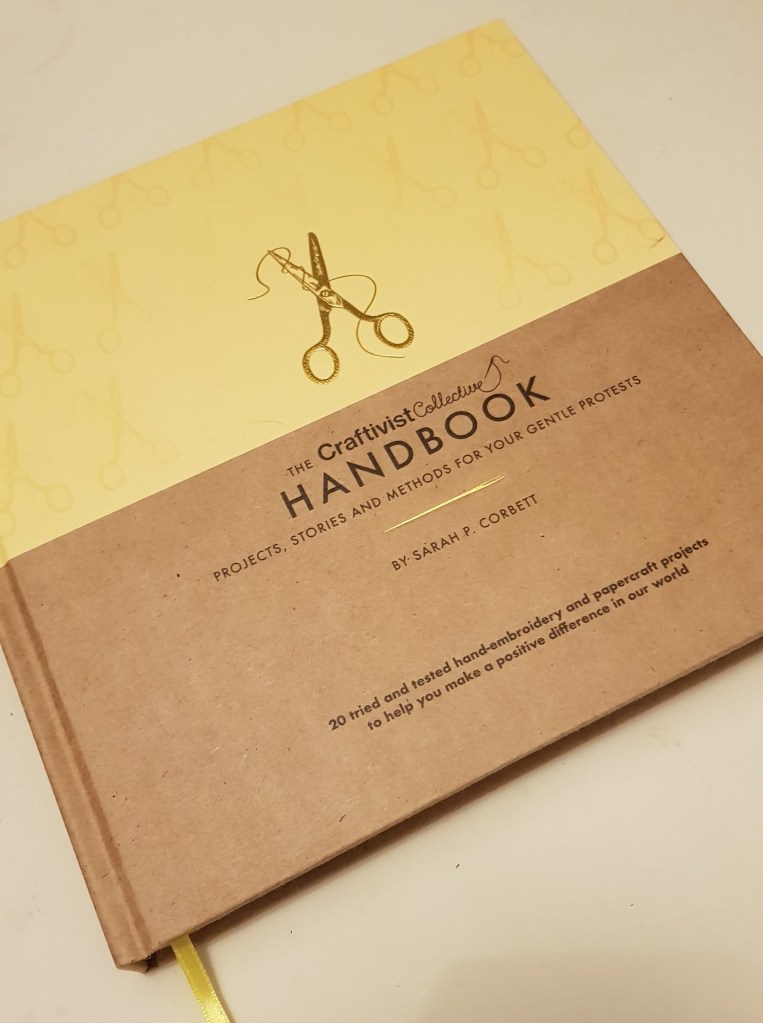
Last month, I had the incredible opportunity to attend a talk with Sarah Corbett and Professor Helen Pankhurst. These two inspiring women delved into the world of craftivism and shared profound insights on how gentle protest can foster meaningful change. For those unfamiliar, craftivism is a form of activism that merges crafting with social or political protest, and Sarah Corbett is a pioneer in this field. You can find more information about her and her amazing new book- here!
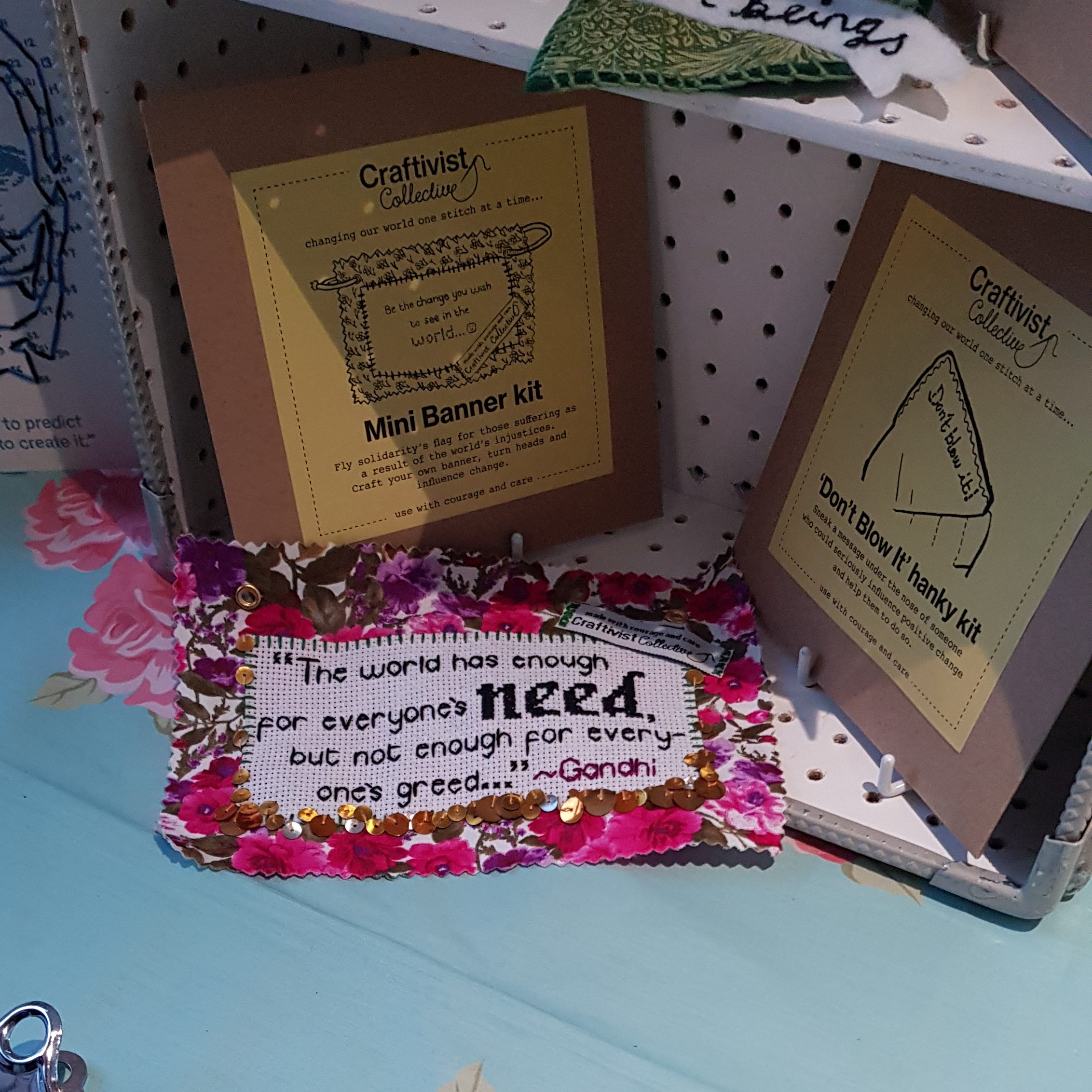
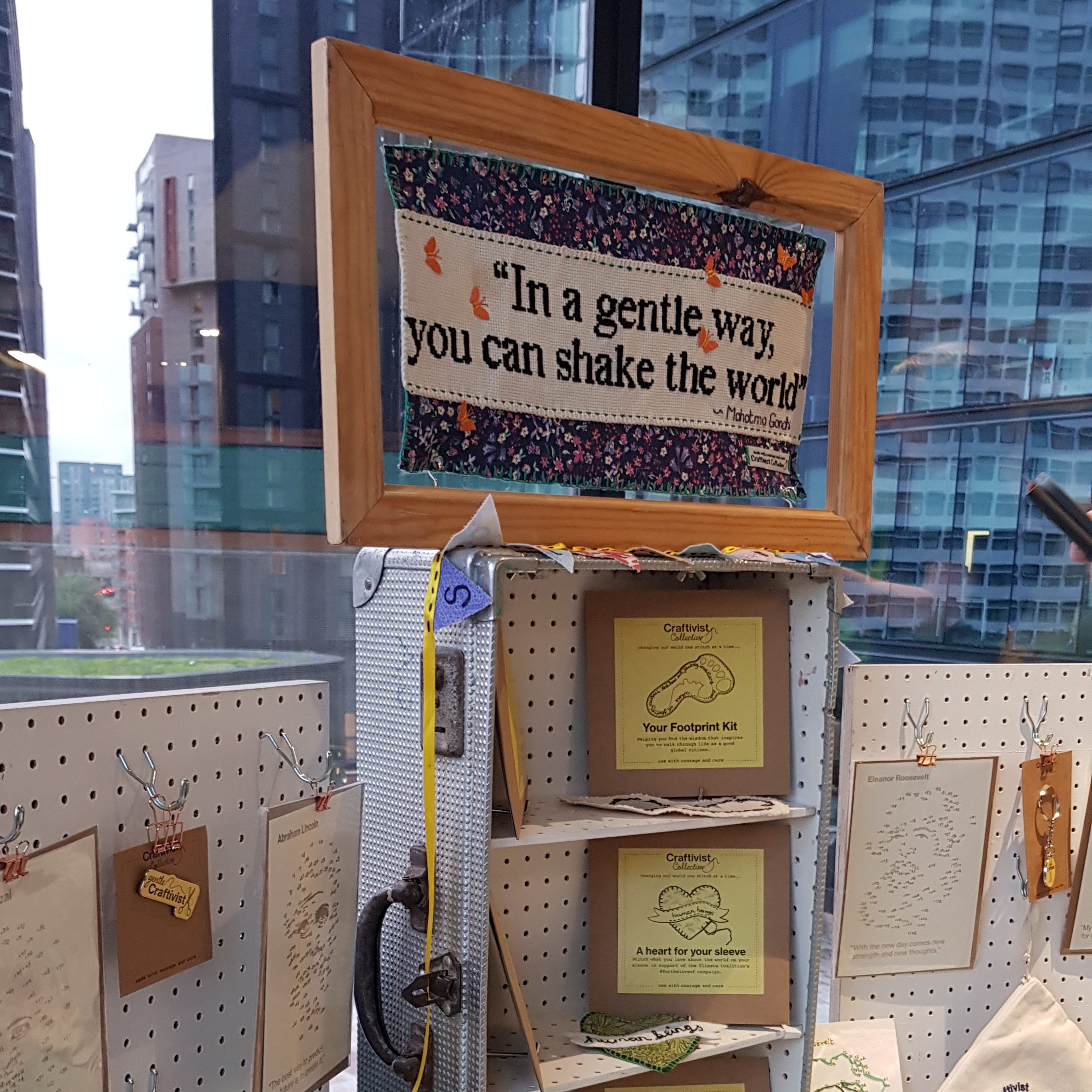
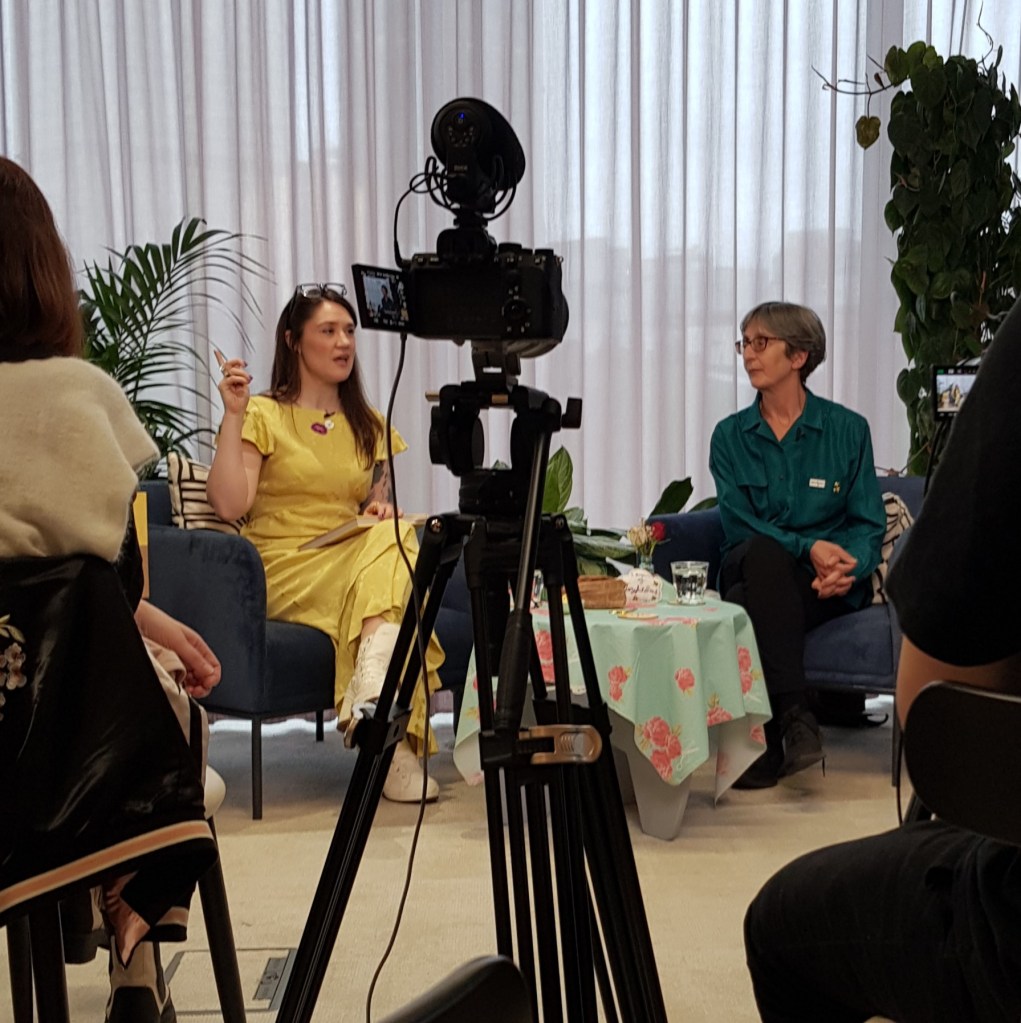
Sarah introduced her concept of Gentle Protest, which involves using craft as a peaceful, contemplative form of activism. This approach encourages activists to slow down, reflect deeply, and engage thoughtfully with the issues they care about. Unlike loud, confrontational forms of protest, gentle protest creates a space for dialogue and connection, making it a particularly appealing method for introverts like myself.
As someone who tends to shy away from large, noisy demonstrations, craftivism feels like a natural fit. The process of creating something with my hands allows me to channel my energy and thoughts into a tangible piece of art. It’s a way of engaging with the world that feels authentic to who I am, providing a sense of purpose without the anxiety that often accompanies more extroverted forms of activism.
One of the key takeaways from the talk was the idea that slowing down and thinking through our activism can be incredibly powerful. In our fast-paced world, it’s easy to feel pressured to act quickly and loudly. However, taking the time to craft something meaningful can lead to a deeper understanding of the issues at hand and foster more thoughtful, compassionate engagement. This slow, deliberate approach can also create opportunities for reflection and growth, both personally and within our communities.
For me, craftivism is also about focusing on shared values. When we engage in gentle protest, we’re not just broadcasting our beliefs; we’re inviting others into a conversation. This can help break down barriers and reduce the us-versus-them mentality that often dominates social and political discourse. By creating something beautiful and meaningful, we can connect with others on a deeper level, finding common ground and understanding rather than seeing each other as enemies.
Most of the craftivism I’ve seen so far has involved embroidery, which is undoubtedly beautiful and impactful. However, as a crochet enthusiast, I’ve been thinking a lot about how to incorporate this craft into my activism. Crochet has a rich history and a versatility that I believe can serve many causes. Whether it’s creating warm blankets for the homeless, crafting symbols of solidarity, or making items that raise awareness about important issues, crochet offers endless possibilities for gentle protest.
It’s essential to remember that the craft should serve the cause, not the other way around. But I also believe it’s important to use our strengths in our activism. Crochet is my strength, my passion, and I’m excited to explore how I can use it to contribute to the craftivism movement. By leveraging my skills, I hope to create pieces that not only convey my values but also inspire others to think deeply about the issues we face and join me in gentle protest.
In conclusion, the talk with Sarah Corbett and Professor Helen Pankhurst was a reminder of the power of craftivism and gentle protest. It reaffirmed my belief that activism doesn’t have to be loud to be effective. For introverts and those who seek a more reflective approach to making a difference, craftivism offers a beautiful, meaningful path. As I continue to explore this form of activism, I look forward to using crochet to create change, connect with others, and promote the values that matter most to me.

 Jack's Yarn Crochet Designs